
Briefcase 2026 January: Real Estate Industry News Articles
Canada’s real estate markets are entering 2026 in transition.
Cap rates have largely stabilized. Transaction activity is selective but improving. Rental supply is accelerating while demand normalizes. Investors are shifting from “wait and see” to quiet repositioning.
This month’s briefcase highlights where capital is cautious, where it’s returning, and what trends are shaping the next cycle.
Commercial Real Estate
Canada Resilient Heading Into 2026 But Risk Remain
Monthly Market Commentary – December 2025 (CBRE)
Stabilization Phase Taking Hold
CBRE’s December commentary confirms that most major Canadian CRE sectors are no longer deteriorating, but recovery remains uneven.

Key highlights:
Office vacancy remains elevated but is flattening in Toronto, Vancouver, and Montréal
Industrial demand remains structurally strong despite slower leasing velocity
Retail fundamentals continue to improve, especially grocery-anchored and necessity-based formats
Investment activity remains selective with a strong preference for quality assets
Source: https://www.cbre.ca/insights/briefs/canada-monthly-market-commentary-december-2025
Cap Rates & Investment Sentiment – Q4 2025 (CBRE)
Pricing Reset Largely Complete
CBRE’s Q4 2025 Cap Rates & Investment Insights report suggests that the repricing phase is largely behind us.


Multifamily Investment Trends

Ottawa Investment Trends

What investors should note:
Cap rates stabilized across most asset classes in Q4
Industrial cap rates remain the most compressed relative to historical norms
Office cap rates continue to reflect asset quality bifurcation
Investor underwriting assumptions are becoming more consistent across markets
Source: https://www.cbre.ca/insights/reports/canada-cap-rates-investment-insights-q4-2025
Six Canadian CRE Projects to Watch in 2026 (CBRE)
Where Capital, Cities, and Scale Intersect
CBRE highlights six major commercial and mixed-use projects expected to shape Canadian real estate in 2026.

Themes emerging from these projects:
Transit-oriented development
Mixed-use density over single-use assets
Office repositioning rather than new supply
Public-private collaboration
CRE Lending Momentum: Highest Since 2018
Lending picked up as cost of debt stabilized
CBRE noted CRE lending activity climbed to the highest level since 2018, driven by alternative lenders, banks, and strong demand in multifamily and industrial sectors — even as office and retail volumes grew modestly.

The CBRE Lending Momentum Index. Chart courtesy of CBRE Capital Markets, CBRE Research, Q3 2025
(Source: CommercialSearch/CBRE summary)
Investor Insight: Strong debt availability can support acquisitions, refinancing, and development starts — especially outside traditional office.
Office Market Snapshot: Mixed Signals in Q3 2025
Canadian office fundamentals remain challenged
Altus Group’s Q3 2025 office update highlighted persistent availability and sluggish office demand amid hybrid work trends.
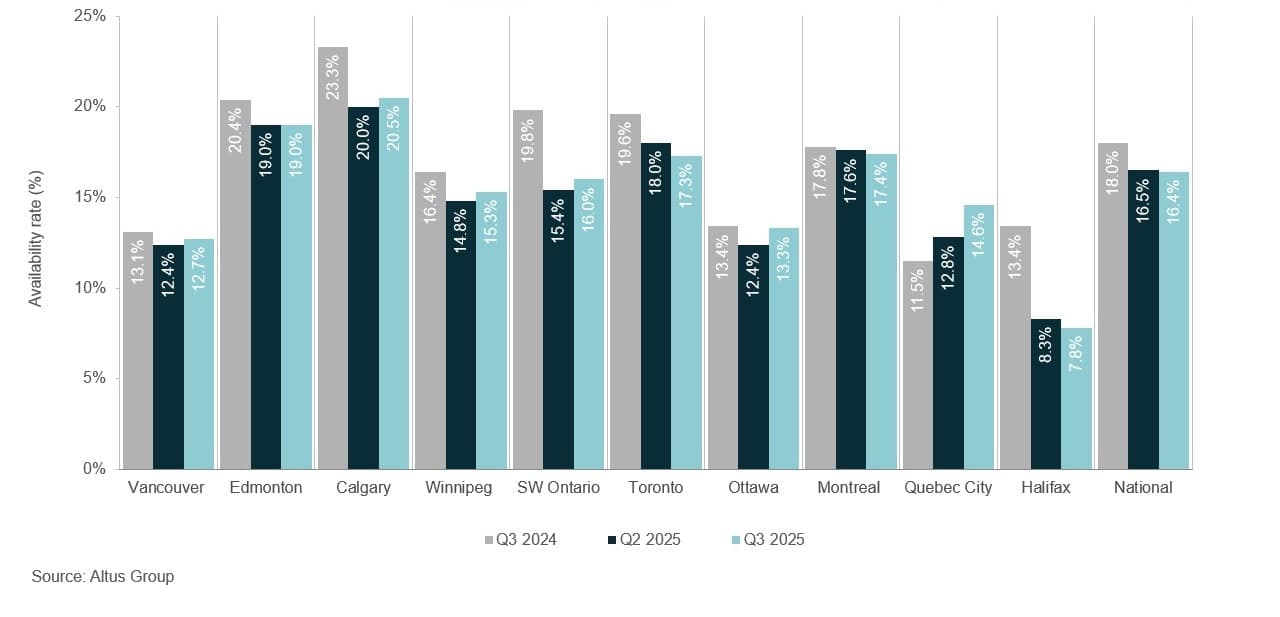
Figure 1: Office availability rate (Q3 2024 vs. Q2 2025 vs. Q3 2025)
(Source: Altus Office Update)
Investor Insight: Office remains a nuanced play — core CBD improvements in select cities but suburban and secondary markets show divergent performance.
Retail Sector & Retail Closures
Legacy retail continues structural change
The liquidation of Hudson’s Bay Company stores and shifting retail footprints illustrate the ongoing retail transformation, impacting CRE landlord tenant mixes and driving adaptive use strategies.
(Source: HBC liquidation summary)
Investor Insight: Retail landlords must pivot to experiential, convenience-oriented retail or mixed-use densification to preserve value.
MULTI-RESIDENTIAL / APARTMENTS SECTION
Rental Market Normalizing After Historic Tightness

Recent data from CMHC, Urbanation, and private research firms shows a clear shift:
National vacancy rates have risen above 3%
Rent growth has slowed and, in some markets, reversed
Incentives are returning in lease-up heavy submarkets
This reflects supply catching up to demand, not a collapse in fundamentals.
Ottawa’s Rental Market: Vacancy Trends & Purpose-Built Apartments
Ottawa’s rental market has shown signs of easing in 2025, according to the CMHC Rental Market Report for major centres. The city’s overall rental vacancy rate — which reflects how many units are unoccupied and available for rent — has risen to around 3.0% in 2025, a modest increase compared to previous years and broadly in line with national trends.

A key segment of this market is purpose-built rental housing — residential buildings constructed specifically for long-term rental, not converted from condominiums or owned as individual units. These purpose-built rentals remain an important indicator of housing supply and tenant choice. In Ottawa, as more purpose-built units have come online, vacancy rates in that segment have also increased, helping slightly relax what has historically been a tight market.

Despite the increase, Ottawa’s vacancy rate is still relatively low by historical standards, meaning demand continues to outpace supply in many parts of the city — particularly for older and lower-rent units, which often have much lower vacancy than newer developments.
In summary, Ottawa’s purpose-built rental market is gradually shifting toward a more balanced environment, with vacancy rates rising moderately, offering renters more options than in recent years — but demand pressures remain a feature of the local housing landscape.
CMHC Rental Market Reports:
https://www.cmhc-schl.gc.ca/professionals/housing-markets-data-and-research/market-reports/rental-market-reports-major-centres
Development & Construction Pipeline
Rental Construction Still Elevated

CMHC data shows rental construction remains near cycle highs in several CMAs.
Notable trends:
Alberta markets leading new rental starts
Ontario seeing fewer condo starts but steady rental activity
Increased focus on mid-rise and mixed-use formats
CMHC Housing Supply Report:
https://www.cmhc-schl.gc.ca/professionals/housing-markets-data-and-research/market-reports/housing-market/housing-supply-report
Urbanation + Rentals.ca Trend: Asking Rent Declines
Asking rents easing from peaks
Urbanation and Rentals.ca data show average asking rents down from prior peaks (~$2,100 in January) and four consecutive months of annual decline due to supply influx.

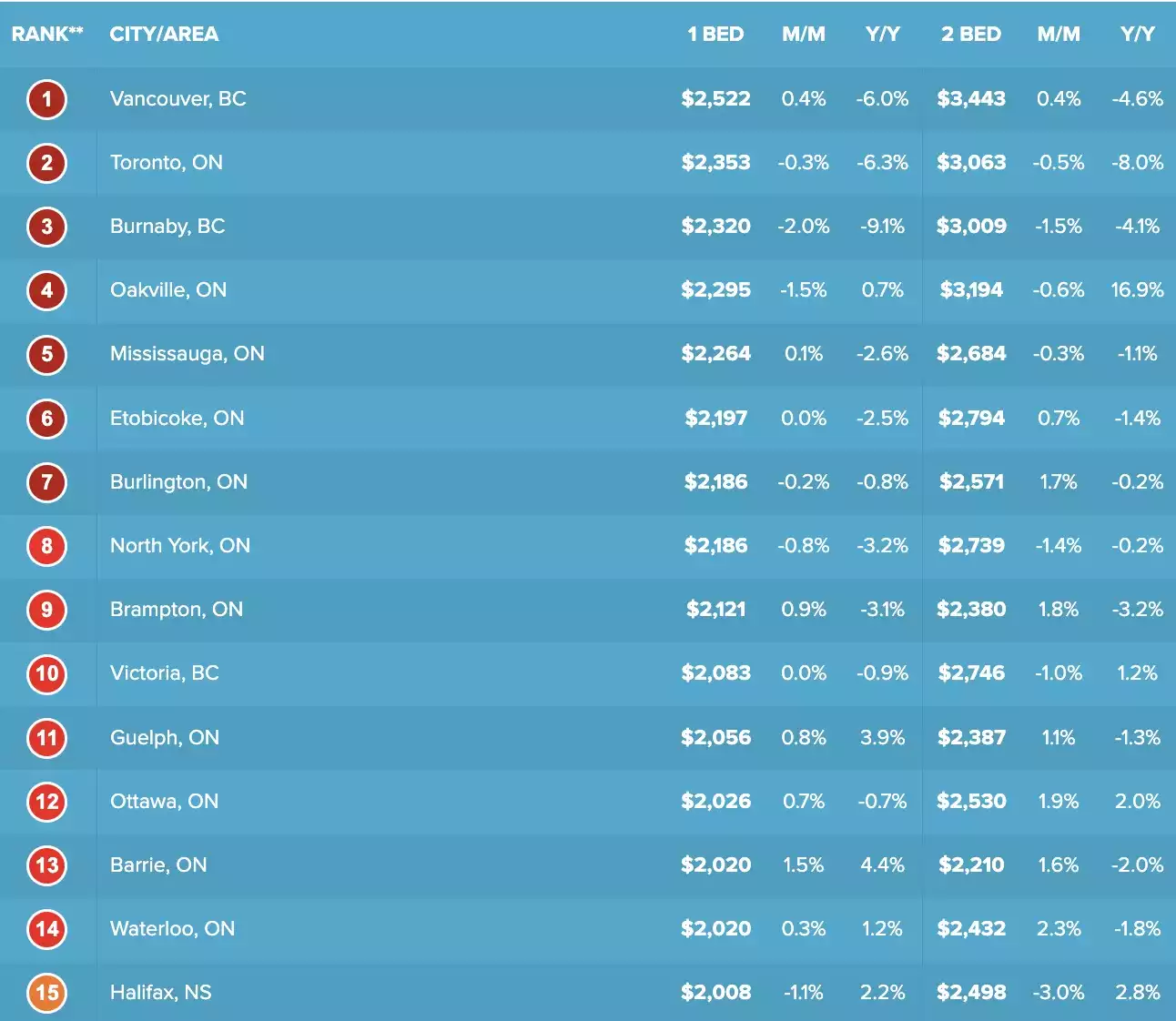

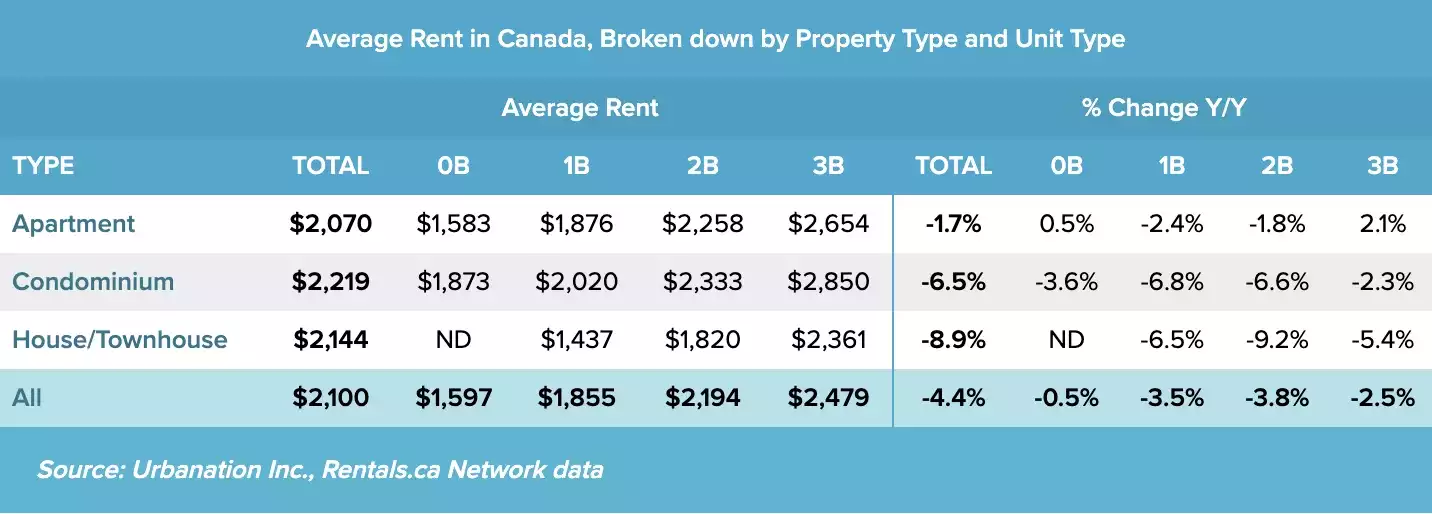
(Source: Urbanation/Rentals.ca market data)
Investor Insight: Slowing rents don’t necessarily mean weaker fundamentals — they reflect normalized market balance.
Purpose-Built Pipeline & Cnstruction
CMHC data indicates strong purpose-built rental pipeline activity — developers are focusing on rental over condo due to market incentives and demand.

(Source: CMHC Housing Supply info)
Investor Insight: Pipeline growth supports long-term rental market fundamentals, but watch absorption timelines and interest rate shifts.
DEVELOPMENT PIPELINE UPDATES
New Starts vs Completions (CMHC Housing Supply)
Purpose-built rentals increasing share of starts
CMHC’s housing supply report shows rental starts surging, especially in more affordable markets, while condo starts lag, reshaping future housing inventory.

Pre-Construction & Redevelopment
Adaptive reuse rising due to retail closures and office vacancies — potentially converting underutilized space into residential/mixed-use projects. (Trend reinforced by industry observation)
(Source: CMHC Housing Supply Report)
Investor Eye Candies
A few high-signal reads influencing investor thinking in 2026, beyond real estate.

Global Economic Outlook – IMF
Where global growth, inflation, and risk are heading
The IMF’s latest outlook covers global growth forecasts, inflation trends, and downside risks shaping capital allocation decisions worldwide.
🔗 https://www.imf.org/en/Publications/WEO
Interest Rates & Financial Stability – Bank for International Settlements (BIS)
Why “higher for longer” is still the base case
A deep dive into global monetary policy, financial stability risks, and how prolonged tight conditions affect asset pricing and leverage.
🔗 https://www.bis.org/publ/arpdf/ar2024e.htm
Capital Markets & Risk – World Economic Forum
How investors are reassessing risk
Explores systemic risks, market volatility, and structural shifts influencing investment strategy across asset classes.
🔗 https://www.weforum.org/publications/global-risks-report-2024/
AI & Investment Strategy – McKinsey Global Institute
How AI is changing capital allocation
Examines how artificial intelligence is reshaping decision-making, productivity, and risk analysis in capital markets and investing.
🔗 https://www.mckinsey.com/mgi/our-research/generative-ai-and-the-future-of-work
Sources & References
Morguard – Canada CRE Outlook 2026
https://www.marketscreener.com/news/canada-s-commercial-real-estate-markets-poised-for-gradual-stabilization-and-growth-in-2026-morguar-ce7e58d9d08af127
RENX – Forces Shaping Canadian CRE in 2026
https://renx.ca/the-new-baseline-the-forces-shaping-cre-in-2026
Altus Group – Vancouver Commercial Real Estate Market Update
https://www.altusgroup.com/insights/vancouver-commercial-real-estate-market-update/
Altus Group – Canadian Office Market Update
https://www.altusgroup.com/insights/canadian-office-market-update/
CommercialSearch / CBRE – CRE Lending Activity
https://www.commercialsearch.com/news/cre-lending-hits-highest-level-since-2018/
CMHC – Canada Rental Market Report (Vacancy & Rent Trends)
https://www.cmhc-schl.gc.ca/media-newsroom/news-releases/2025/canadas-vacancy-rate-rises-amid-historically-high-rental-construction
CMHC – Housing Market Information & Research Reports
https://www.cmhc-schl.gc.ca/professionals/housing-markets-data-and-research/market-reports
CMHC – Housing Supply Report (Starts, Completions, Pipeline)
https://www.cmhc-schl.gc.ca/professionals/housing-markets-data-and-research/market-reports/housing-market/housing-supply-report
Urbanation / Rentals.ca – National Rent Trends
https://www.rentalsfornewcomers.com/news/rent-report-for-newcomers-prices-and-demand-continue-to-fall
Hudson’s Bay Company – Retail Closure & Liquidation Context
https://en.wikipedia.org/wiki/Hudson%27s_Bay_Company